

Description
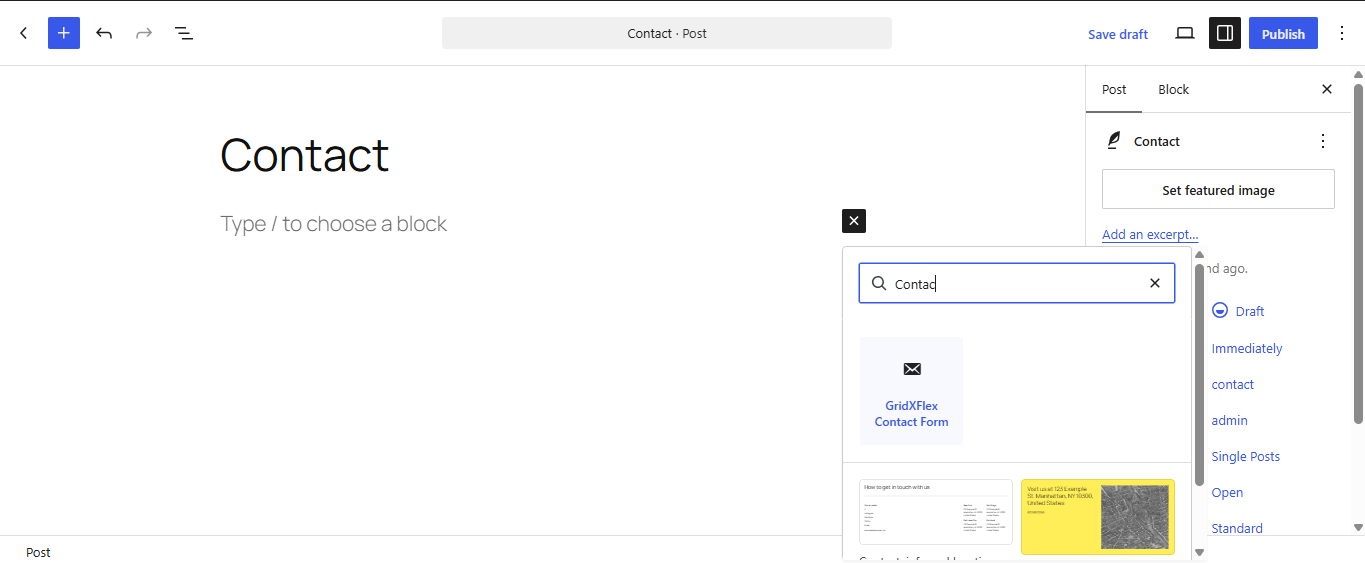
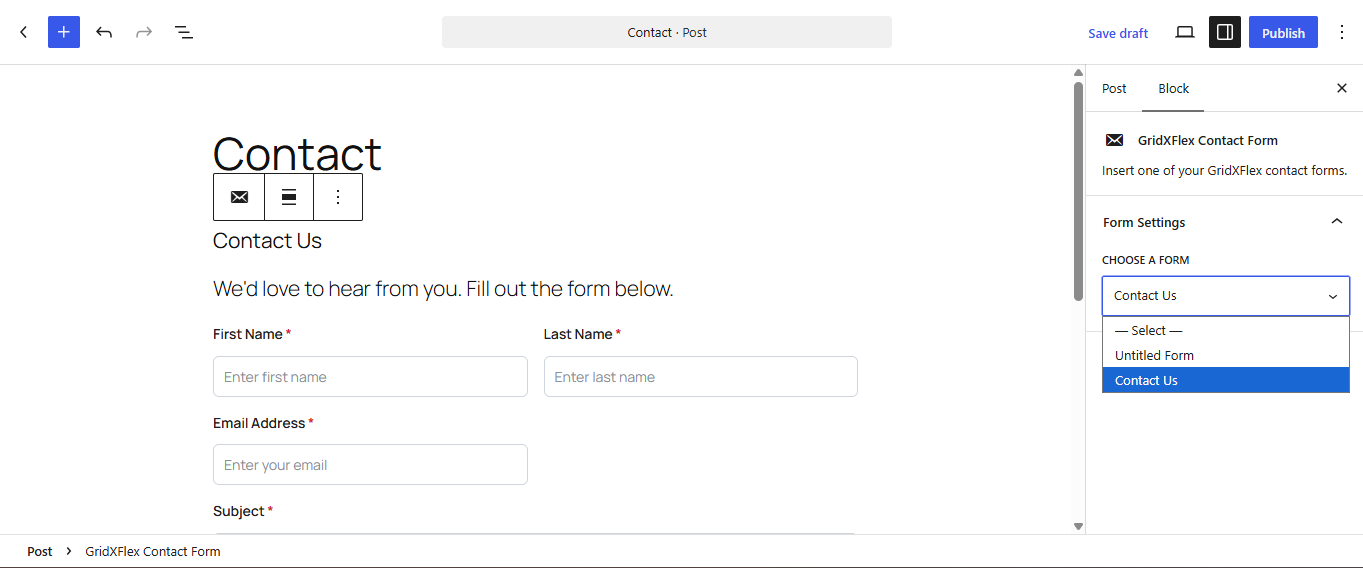
GridXFlex Contact Forms is a lightweight contact form builder for WordPress — no third-party services required. Build unlimited forms, each with its own fields, design, and settings, and insert them anywhere with the “GridXFlex Contact Form” block or a simple shortcode.
Features
- Unlimited forms, each with its own fields, design, and settings
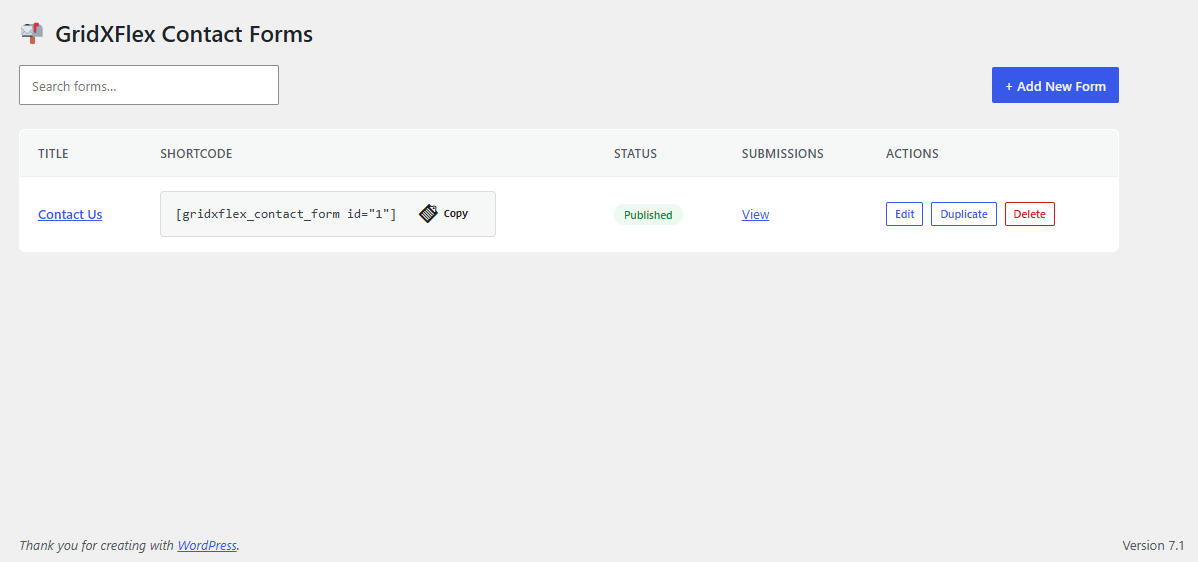
- Duplicate an existing form with one click from the Forms list — copies its fields, design, and settings
- Search/filter the Forms list by title
- Insert via shortcode
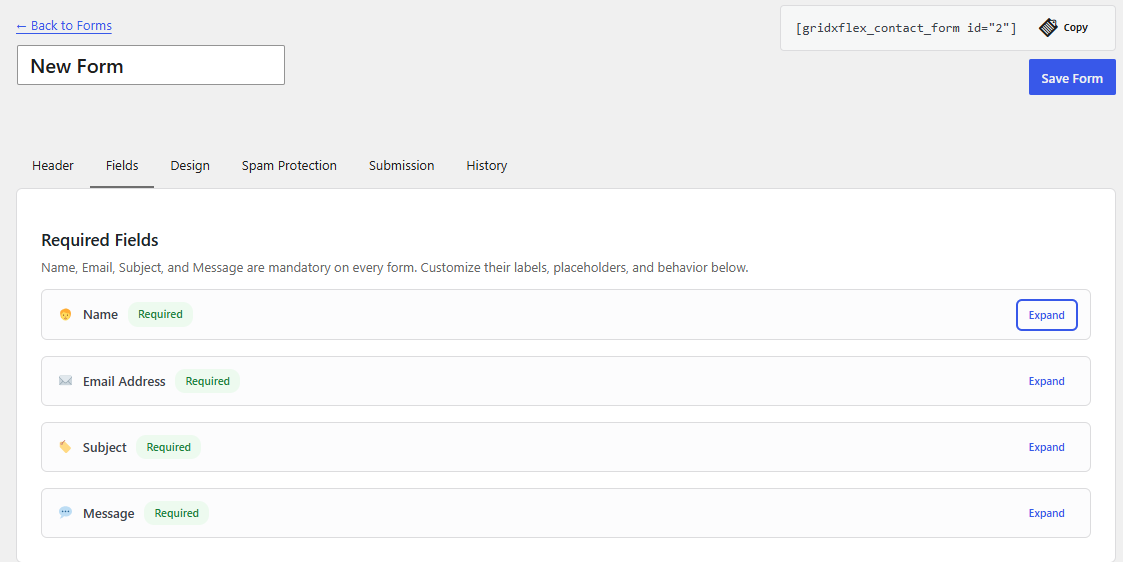
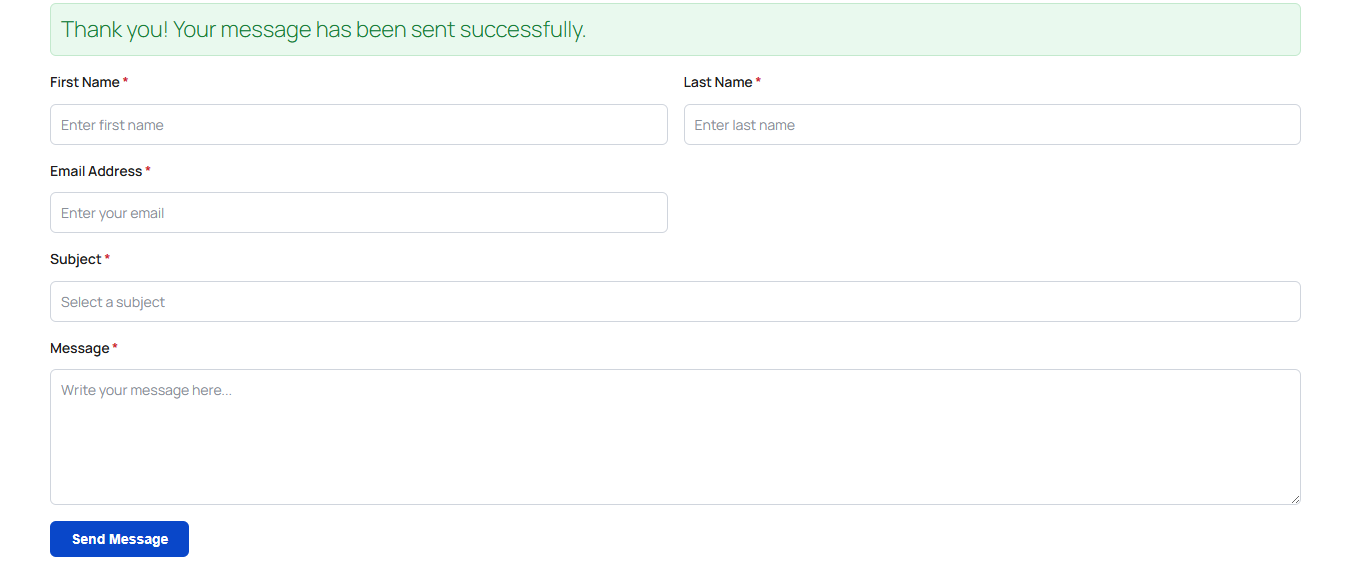
[gridxflex_contact_form id="12"]or the “GridXFlex Contact Form” block — with a one-click copy-to-clipboard button next to the shortcode, in both the Forms list and the form editor header - Fields: Name (single or split first/last), Email (real-time validation), Subject (text or dropdown), Message (adjustable rows, optional character limit); every field also supports its own placeholder text, help text, and default value
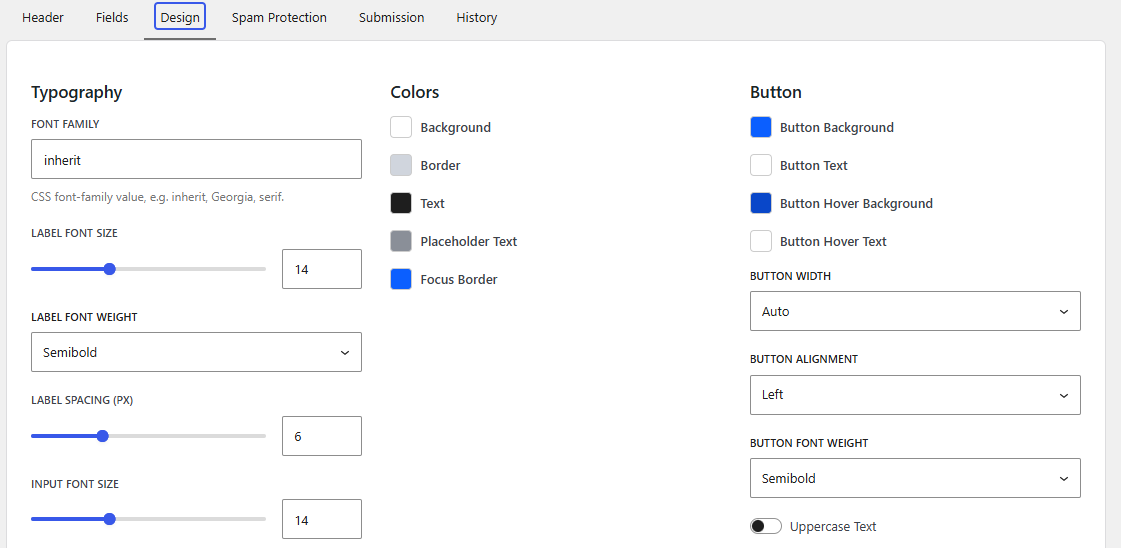
- Full visual design controls per form: typography, colors, borders, spacing, shadows, container layout, and button styling
- Responsive Design Responsive Spacing panel: independent per-side (top/right/bottom/left) padding and margin for Mobile, Tablet, and Large Devices, plus a container background color picker — every value defaults to 0px until you set it
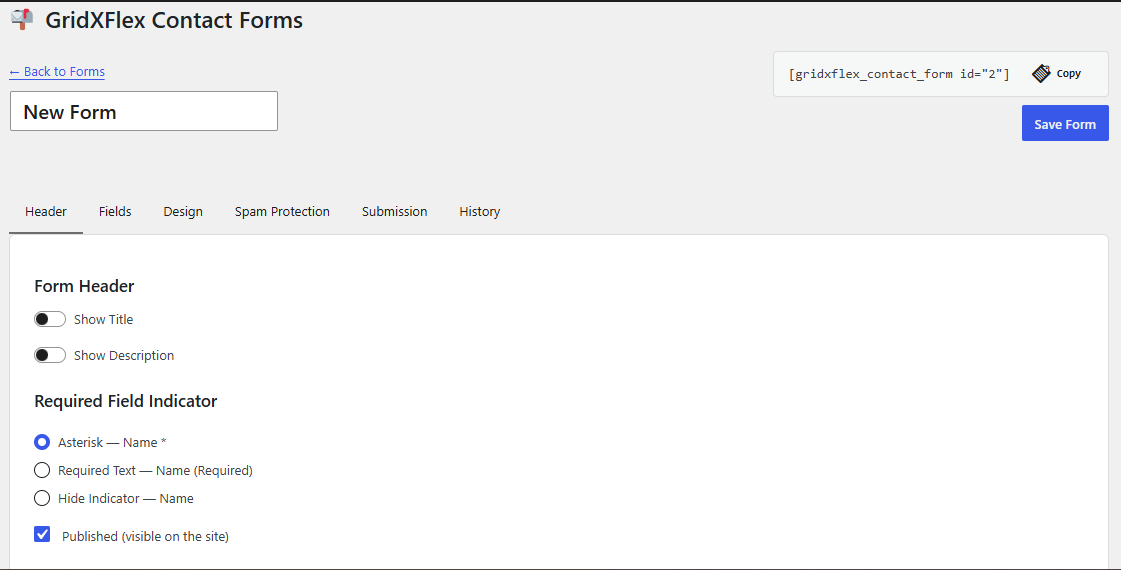
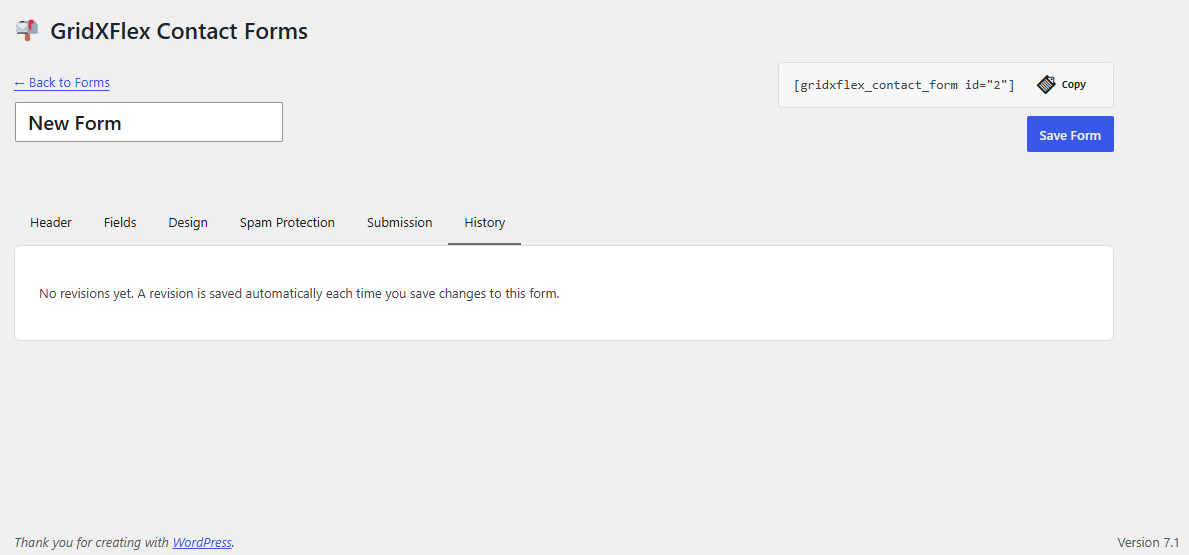
- Revision history: every save snapshots the form’s previous state, viewable and restorable from the editor’s History tab — restoring itself creates a new revision, so it’s always undo-able
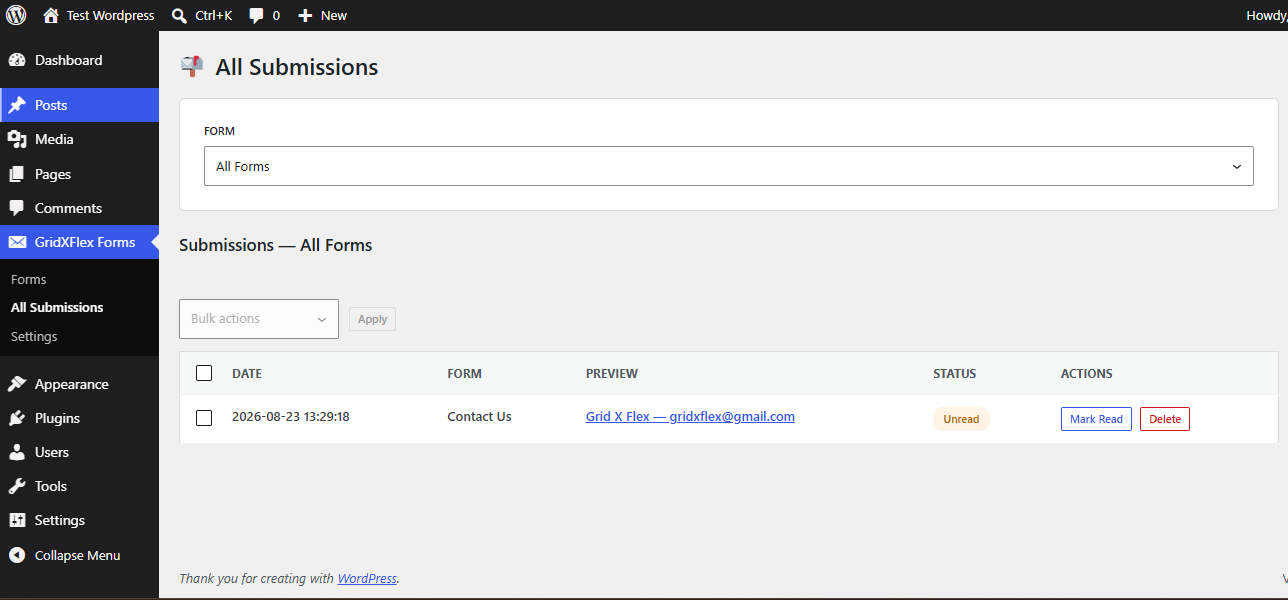
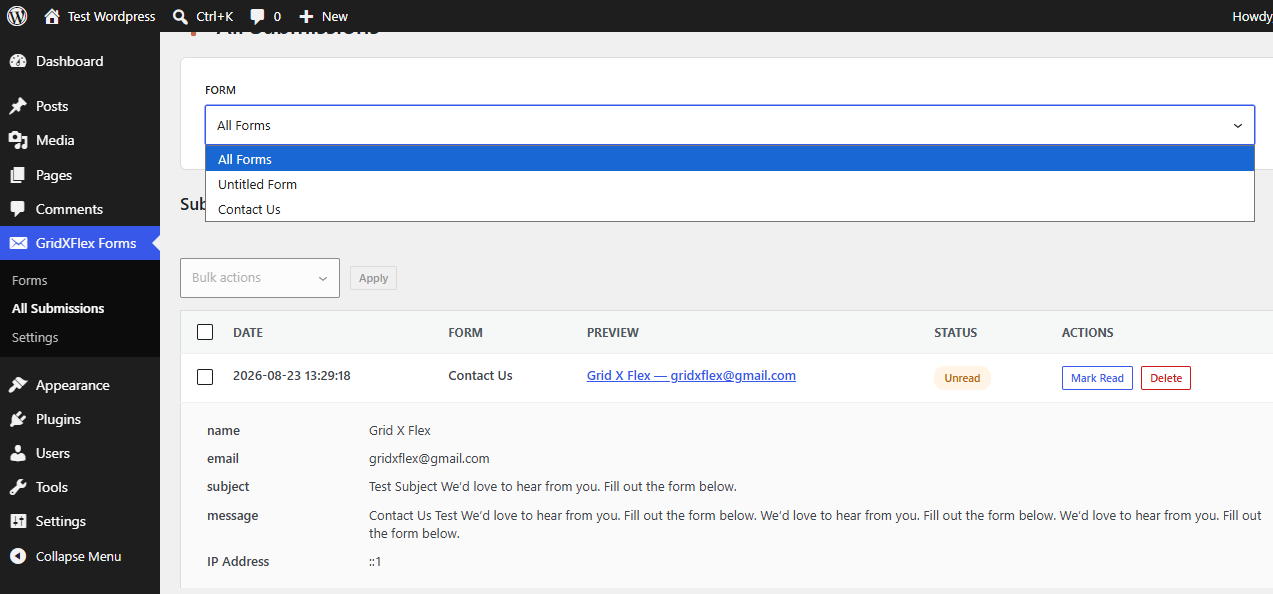
- A dedicated All Submissions page lists submissions across every form, with a form picker, independent of the per-form editor
- Responsive field layout with configurable field widths (100% / 50% / 33%)
- Configurable required-field indicator: asterisk, “(Required)” text, or hidden
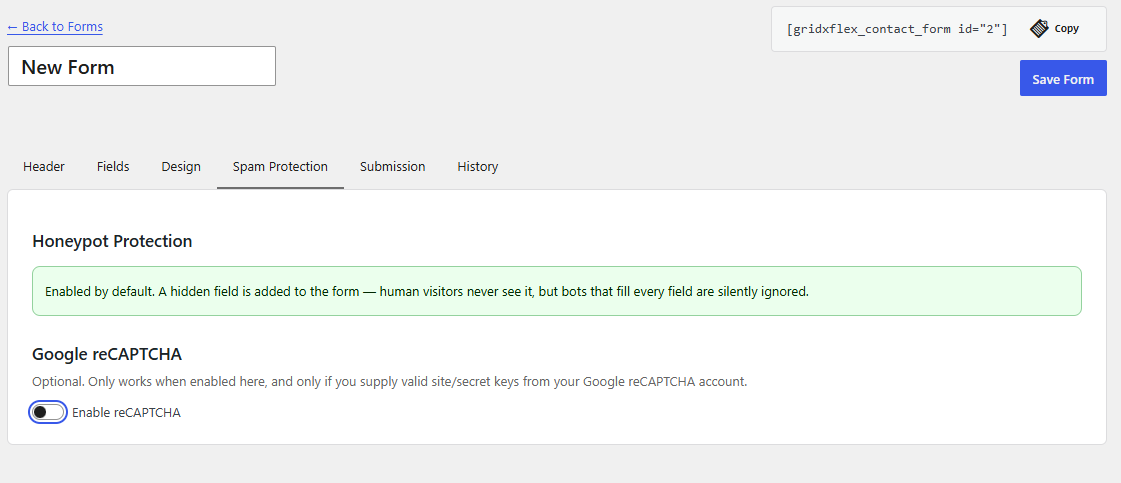
- Honeypot spam protection, enabled by default
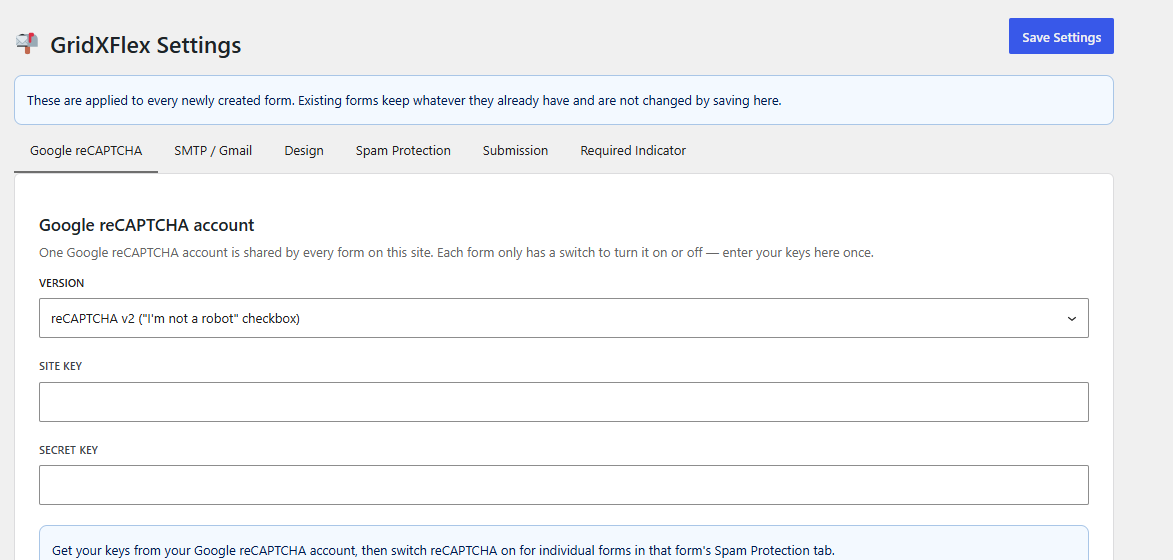
- Optional Google reCAPTCHA v2 or v3
- Submissions dashboard: read/unread status (toggle any submission between Mark Read / Mark Unread), an unread-count badge shown per form in the Forms list, detail view, delete, CSV export
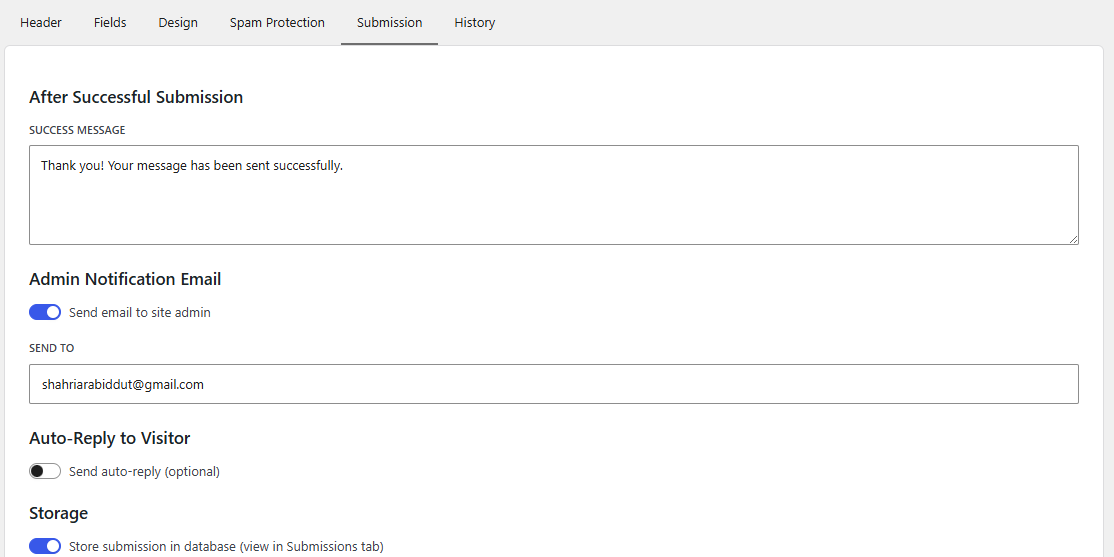
- Email notifications to the site admin, with optional auto-reply to the visitor — sent via
wp_mail()with a proper From header and failure logging - Optional SMTP sending (e.g. Gmail) as a backup mail transport: one shared account configured once in Settings, with a per-form switch (Submission tab) to route that form’s emails through it
- Accessible markup: keyboard navigation, screen-reader-friendly labels, inline error messages
External services
This plugin can optionally connect to Google reCAPTCHA (v2 or v3) for spam protection on individual forms. It is disabled by default; a site owner must explicitly enable it site-wide (GridXFlex Forms Settings) and then switch it on per form (Spam Protection tab) before any data is sent to Google.
When enabled for a given form, on every submission of that form the visitor’s browser loads a script from Google (https://www.google.com/recaptcha/api.js), and the plugin’s server sends the reCAPTCHA response token and the visitor’s IP address to Google’s verification endpoint (https://www.google.com/recaptcha/api/siteverify) to confirm the submission is not automated.
This service is provided by Google: Terms of Service, Privacy Policy.
Screenshots
Installation
- Upload the
gridxflex-contact-formsfolder to/wp-content/plugins/. - Activate the plugin through the Plugins menu in WordPress.
- A starter “Contact Us” form is created automatically. Go to GridXFlex Forms in the admin menu to edit it or add new ones.
- Insert a form using its shortcode (shown on the Forms list and inside the form editor) or the “GridXFlex Contact Form” block.
FAQ
-
Does this plugin store submissions in my database?
-
Yes, by default. Disable database storage per-form in the form’s Submission tab if you only want email notifications.
-
Can I use my own reCAPTCHA keys?
-
Yes — enable reCAPTCHA in a form’s Spam Protection tab and enter your site key and secret key.
-
My contact form emails aren’t arriving — can I use SMTP instead?
-
Yes. Go to GridXFlex Forms Settings SMTP / Gmail, enable it, and fill in your SMTP host, port, encryption, and credentials (for Gmail, use a 16-character App Password, not your normal password — the “Fill in Gmail defaults” button prefills the host/port/encryption for you). Then, per form, turn on “Send this form’s emails via SMTP” in that form’s Submission tab. Forms that leave the switch off keep using WordPress’s default mail transport.
-
What happens to my data if I remove the plugin?
-
Deactivating the plugin never touches your data. Deleting it does not run any cleanup — export what you need first (CSV export is in the Submissions tab), then remove the plugin’s two database tables manually if desired.
-
Does this plugin transmit any data externally?
-
No, unless you enable the optional Google reCAPTCHA feature (verification requests go to Google), or you enable and opt a form into the optional SMTP feature (that form’s emails are sent through the SMTP server you configure, e.g. Gmail, instead of your host’s default mail transport).
-
Does the plugin keep a history of changes to a form?
-
Yes. Every time you save a form, its previous state is kept as a revision, visible on the editor’s History tab. Restoring an older revision saves the current version as a new revision first, so restoring is itself undo-able. The most recent 20 revisions per form are kept.
-
Why did my email notifications stop arriving?
-
Check the form’s Submission tab settings are correct, and confirm your host’s outbound mail is configured (an SMTP plugin is often needed —
wp_mail()alone relies on your server’s mail transport). A failed send is logged so the underlying cause is easier to diagnose.
Reviews
There are no reviews for this plugin.
Contributors & Developers
“GridXFlex Contact Forms” is open source software. The following people have contributed to this plugin.
Contributors
Translate “GridXFlex Contact Forms” into your language.
Interested in development?
Browse the code, check out the SVN repository, or subscribe to the development log by RSS.
Changelog
1.0.0
- Initial release.
- Unlimited forms, each with its own fields, design, and settings.
- Insert via shortcode
[gridxflex_contact_form id="12"]or the “GridXFlex Contact Form” block. - Fields: Name (single or split first/last), Email (real-time validation), Subject (text or dropdown), Message (adjustable rows, optional character limit).
- Full visual design controls per form: typography, colors, borders, spacing, shadows, container layout, and button styling.
- Design Responsive Spacing: independent per-side (top/right/bottom/left) padding and margin for Mobile, Tablet, and Large Devices, plus a container background color picker.
- Form revision history: every save snapshots the previous state, viewable and restorable from the editor’s History tab. Restoring itself creates a new revision, so it’s always undo-able.
- A dedicated “All Submissions” admin page listing submissions across every form via a form picker, independent of the per-form editor.
- Responsive field layout with configurable field widths (100% / 50% / 33%).
- Configurable required-field indicator: asterisk, “(Required)” text, or hidden.
- Honeypot spam protection, enabled by default; optional Google reCAPTCHA v2 or v3, configured once for the whole site on a dedicated Settings page — each form only gets an on/off switch.
- A Settings page for site-wide reCAPTCHA keys and the default field/design/spam/submission values every newly created form starts from.
- Submissions dashboard: read/unread status, detail view, delete, CSV export.
- Email notifications to the site admin, with optional auto-reply to the visitor, sent via
wp_mail()with an explicit From header and failure logging. - Optional SMTP sending (e.g. Gmail) as a backup mail transport: one shared account on the Settings page (host, port, encryption, credentials, optional From override, Gmail-defaults shortcut) plus a per-form “Send this form’s emails via SMTP” switch on the Submission tab.
- Accessible markup: keyboard navigation, screen-reader-friendly labels, inline error messages.
- Per-form design CSS is now output via wp_add_inline_style()/wp_print_styles() instead of a raw, unenqueued
<style>tag.